The Festival
Cycle
10 traditional festivals across the four seasons — marking the rhythms of agriculture, ancestry, and community.
Spring Festival (Chinese New Year)
春节
1st day of 1st lunar month
The most important Chinese holiday, celebrated with family reunions, elaborate feasts, red envelopes (hongbao), fireworks, and temple fairs. The festival marks the beginning of the lunar new year and lasts 15 days.
Dragon Boat Festival
端午节
5th day of 5th lunar month
A festival commemorating the poet Qu Yuan, featuring dragon boat races, zongzi (sticky rice dumplings), and the drinking of realgar wine.
Mid-Autumn Festival
中秋节
15th day of 8th lunar month
A harvest festival celebrating family reunion under the full moon, with mooncakes, lantern displays, and moon-gazing traditions.
Qingming Festival
清明节
15th day after Spring Equinox
A day of tomb sweeping and ancestor veneration, combined with spring outings and kite flying. It marks the balance of yin and yang at the start of spring.
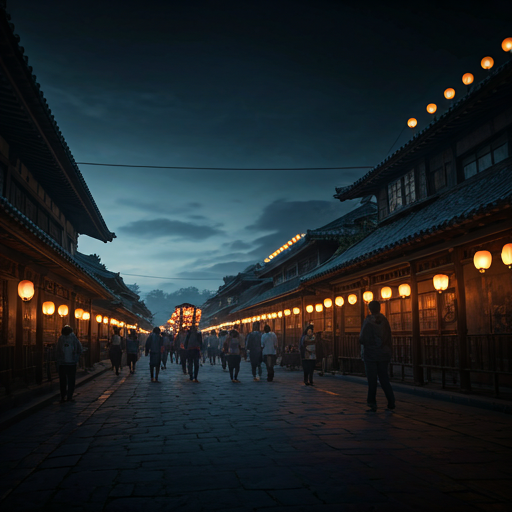
Lantern Festival
元宵节
15th day of 1st lunar month
The culmination of Spring Festival celebrations, marked by elaborate lantern displays, solving lantern riddles, eating tangyuan (sweet rice balls), and lion dances.
Qixi Festival
七夕节
7th day of 7th lunar month
Chinese Valentine's Day, commemorating the reunion of the Cowherd and Weaver Girl. Young women pray for sewing skills and watch for magpies that form a bridge across the Milky Way.
Chongyang Festival
重阳节
9th day of 9th lunar month
A festival of climbing heights, appreciating chrysanthemums, and honoring the elderly. Rooted in the I Ching, the ninth day of the ninth month is a "double yang" date requiring protective customs.
Laba Festival
腊八节
8th day of 12th lunar month
A Buddhist-influenced festival marking the Buddha's enlightenment, celebrated with Laba porridge (a mix of grains, beans, nuts, and dried fruits) and temple ceremonies.
Mazu Birthday Festival
妈祖诞辰
23rd day of 3rd lunar month
The birthday celebration of Mazu, the Chinese sea goddess. Pilgrims from across the Chinese diaspora converge on Meizhou Island for temple ceremonies, processions, and ritual performances.
Winter Solstice Festival
冬至
22nd day of 11th lunar month
The Winter Solstice (Dongzhi) is a time for family gatherings and eating tangyuan or dumplings. In Chinese cosmology, the solstice represents the triumph of yang (light) over yin (darkness).
The Solar Calendar
Festivals are anchored in the 24 solar terms — the agricultural calendar that has guided Chinese life for millennia.
View Calendar