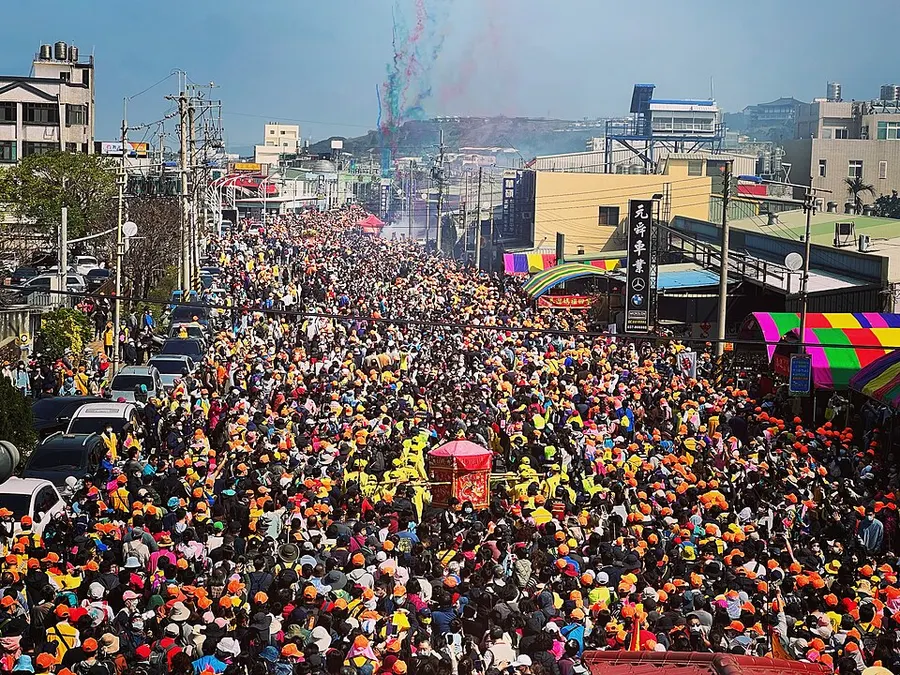
Mazu Birthday Festival — traditional festival scene in China
spring 23rd day of 3rd lunar month (April–May)

Mazu Birthday Festival

妈祖诞辰

Heritage Traditions

1 Items

Related Stories

0 Narratives

Season

spring

Lunar Calendar

23rd day of 3rd lunar month

Recognize its cultural meaning & heritage status?

Read the Intangible Heritage dossier
Cultural Significance

The birthday celebration of Mazu, the Chinese sea goddess. Pilgrims from across the Chinese diaspora converge on Meizhou Island for temple ceremonies, processions, and ritual performances.

Across China, this festival embodies the deep connection between celestial cycles and human culture. Its rituals — passed down through countless generations — serve as a living archive of agricultural knowledge, spiritual belief, and community bonds that define Chinese identity.

Festival Profile

  • Season spring
  • Lunar Calendar 23rd day of 3rd lunar month
  • Gregorian April–May
  • Duration 1 Day
  • Next Occurrence Apr 29, 2027
  • Themes
    Renewal Tradition Community
Geography of Tradition

One Festival, Many Hearts

Mazu Birthday Festival is celebrated across China, with each region adding its unique interpretation while honoring the core traditions. From bustling cities to remote villages, the festival unites communities in shared remembrance and joy.

Heritage Items
Regional Footprint 1 regions · 1 traditions
Southeast China 1 tradition · 1 community

Fujian Province

Heritage Constellation
妈祖诞辰
Mazu Birthday Festival Constellation
Music Ceremonial rhythms
Performance Dramatic storytelling
Cuisine Festive delicacies
Rituals Sacred ceremonies

A Living Legacy

Mazu Birthday Festival is not a museum piece; it is the air we breathe, the food we share, and the stories we tell.

Explore the Archive
Historical Record

History & Development

Mazu Birthday Festival honors Lin Mo, a tenth-century Fujian sea-rescuer deified after her death, on the twenty-third day of the third lunar month at her ancestral temple on Meizhou Island, Putian. Because the date is lunar it drifts across the Gregorian calendar from mid-April to mid-May. Observance begins the night before: from the twenty-second day of the month into the morning of the twenty-third, devotees keep vigil on the island, and the spring sacrifice held before the temple is the single busiest pilgrimage date of the season.

Worship radiates from that Meizhou ancestral temple, founded in 987, but the festival looks different wherever it travels. Hundreds of branch temples across the mainland and the strait hold their own processions on the same lunar date; Taiwan's Dajia Jenn Lann Temple stages the largest, a nine-day, eight-night foot pilgrimage from Dajia in Taichung to Xingang in Chiayi whose published length varies between roughly 300 and 340 kilometres, designated an important folk custom in 2010. The practice also followed emigrants to Southeast Asia — among them Singapore's Thian Hock Keng, the Ma-Cho Temple in the Philippines and Kuala Lumpur's Thean Hou Temple — where surviving Qing-era Mazu shrines number in the dozens.

Cultural Traditions

  1. Pilgrimage Processions

    Palanquins carrying the goddess statue tour branch temples amid firecracker corridors, lion dancers, and umbrella squads; the legend of Mazu explains her escort rituals.

  2. Birthday Opera to the Goddess

    Teahouse stages run marionette and opera performances facing the temple altar, because the shows are staged for Mazu first and humans second.

  3. Offering Sea Harvests

    Fishers present first-catch fish, noodle towers, and birthday peach buns, then share them as community feasts on temple courtyards.

  4. Vigil on the Eve

    From the night of the twenty-second day of the third lunar month into the morning of the twenty-third, devotees gather on Meizhou Island to keep watch before the goddess's birthday, filling the temple precinct through the small hours.

Reference

Common Questions

When is the Mazu Festival each year?

It falls on the twenty-third day of the third lunar month, which moves across the Gregorian calendar from mid-April to mid-May, so the procession date changes every year but always follows the lunar calendar.

Where is Mazu worship centered?

On Meizhou Island, Putian, Fujian, site of the ancestral temple, with the largest diaspora following across Taiwan, Southeast Asia, and Chinatowns worldwide.

How big is the Dajia pilgrimage?

Taiwan's Dajia Jenn Lann Temple procession runs nine days and eight nights on foot from Dajia to Xingang, drawing large crowds and live-television coverage each spring; published figures for its length differ, generally between about 300 and 340 kilometres.

Is the Mazu festival recognised heritage?

UNESCO inscribed "Mazu belief and customs" on its Representative List in 2009 (file 00227). China's national list separately carries the Mazu sacrificial ceremony (妈祖祭典, Ⅹ-36, first batch 2006), and Taiwan designated the Dajia pilgrimage an important folk custom in 2010.

Audiovisual

Watch & Learn

Oral Tradition

Stories & Legends

Narratives from the atlas graph that share origins, practitioners, or settings with this topic.

Lin Mo was born in 960 CE on Meizhou Island, Fujian. From childhood she showed extraordinary powers — she could predict weather, heal the sick, and walk on water. She died young while trying to rescue her father and brother at sea. After her death, she appeared to countless sailors in storms, guiding them to safety. She was deified as Mazu, the Goddess of the Sea, and is worshipped across coastal East Asia.
Visual Record

From the Archive

Photographs documenting the materials, makers, and settings behind these traditions.

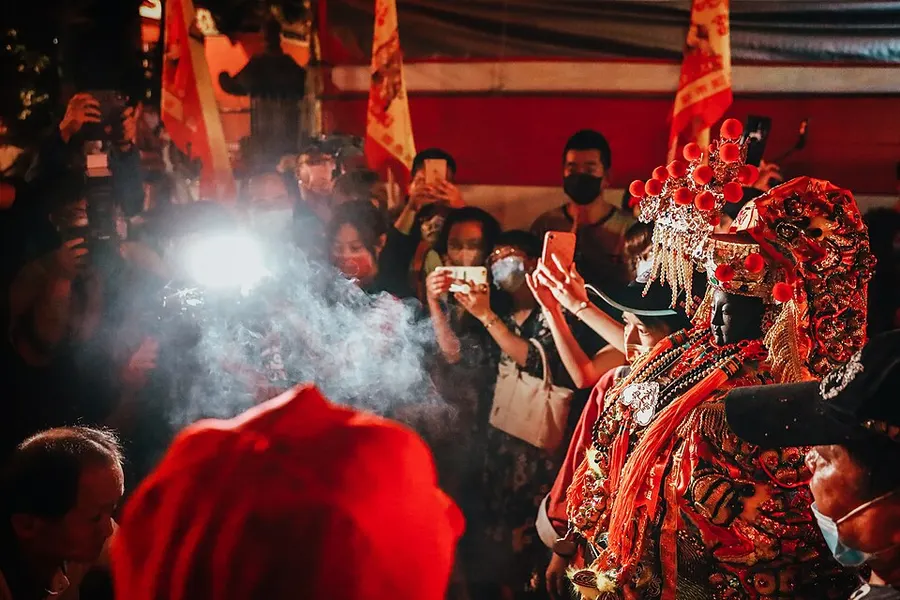
Mazu temple ceremony with pilgrims and incense smoke