menu_book The Full Narrative
01
The Secret of Sericulture
For over 3,000 years, China held a global monopoly on silk. The process was a state secret: carefully cultivating mulberry trees, raising silkworms on their leaves, and painstakingly unraveling the cocoons into single threads that could stretch over a kilometer. Anyone caught smuggling silkworm eggs or mulberry seeds faced the death penalty.
02
The Silk Road
Silk gave its name to the Silk Road, but the network carried much more — spices, ceramics, religions, technologies, and ideas. From the Han Dynasty onward, caravans traveled from Chang'an (Xi'an) through Central Asia to the Mediterranean. The Silk Road was not a single road but a web of routes, and silk was its most precious cargo.
03
Jiangnan: The Silk Heartland
By the Song Dynasty, silk production had shifted to the Jiangnan region, where the humid climate and skilled labor force produced the finest silks in the world. Suzhou and Hangzhou became silk capitals, their workshops producing brocades, satins, and gauzes that were coveted from Venice to Kyoto.
04
Silk Today
The sericulture tradition continues in Zhejiang, Jiangsu, and Sichuan, where master weavers still produce the same luxurious fabrics that once defined the global luxury trade. UNESCO recognized sericulture and silk craftsmanship as an Intangible Cultural Heritage in 2009.
05
One Cocoon, One Kilometre of Thread
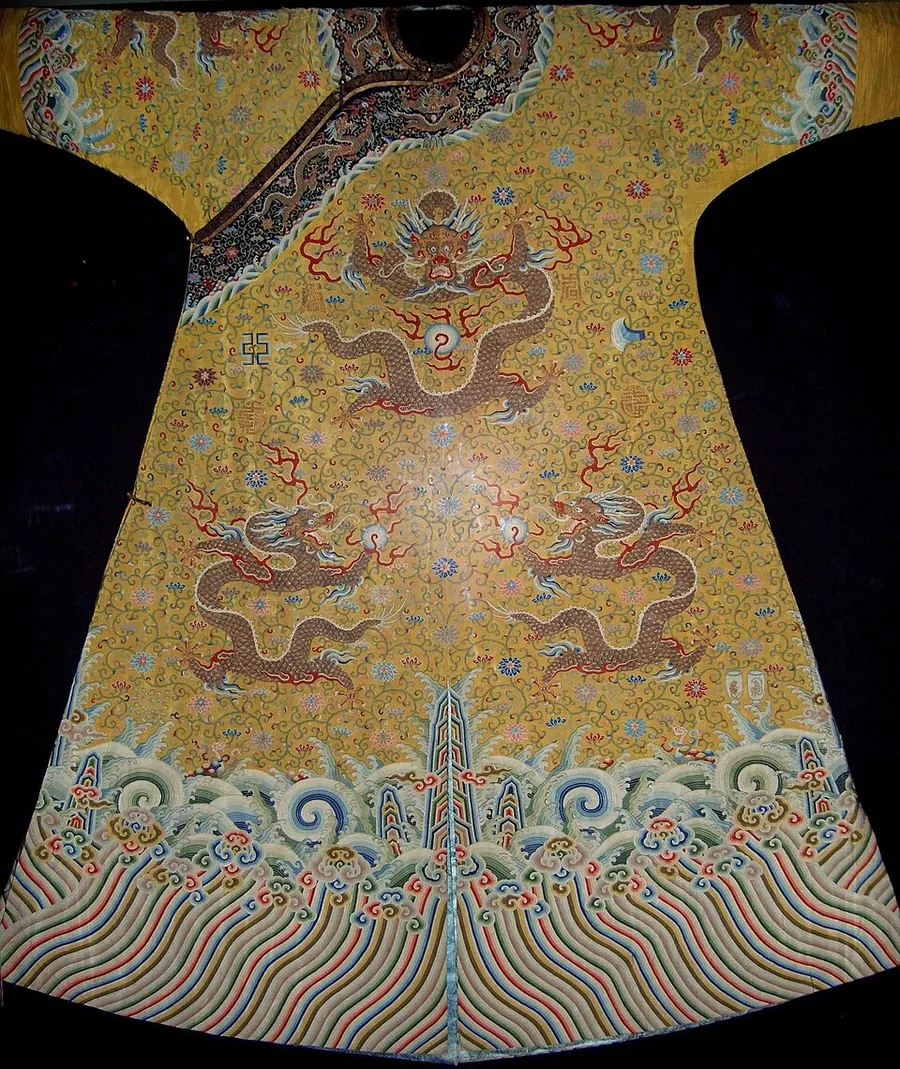
Sericulture begins with a remarkable number. A single Bombyx mori cocoon unravels into one continuous filament between 900 and 1,500 metres long, and weavers need roughly 3,000 cocoons for half a kilogram of raw silk. Reelers dip cocoons in water heated to about 60 degrees Celsius to soften the gum that binds the filament, then combine several strands on a reel. Brocade workshops that raise Nanjing Yunjin brocade weaving on giant drawlooms consume far more thread than plain weaves, which is why imperial robes once demanded the harvest of entire villages of silkworm trays.
06
Eggs Smuggled Out of the Empire
China's monopoly broke when silkworm eggs left the country hidden inside hollow canes. Around 552 CE, two monks reportedly carried eggs to Byzantium under Emperor Justinian, giving Constantinople its own state silk industry. Production spread through Persia to Italy by the twelfth century and to Lyon by the fifteenth, ending the eastern monopoly that had priced silk above gold. China still supplies most of the world's raw silk today, and the caravan corridors that first carried the fabric remain legible along the Silk Road trade geography.
07
Sequencing the Silkworm
Sericulture acquired a research frontier in genomics. In 2004 Chinese scientists published a draft sequence of the silkworm genome, followed by a fine map five years later, giving breeders molecular markers for cocoon size, disease resistance, and silk strength instead of waiting on generational selection cycles. Southwest University in Chongqing operates the leading sericulture platform, maintaining strain libraries that preserve regional landraces alongside engineered lines. Applications stretch past textiles: recombinant spider-silk hybrids, biodegradable surgical meshes, and optical-grade films all trace to silkworm biology now editable in the lab. Traditional regions watch the science warily, but Zhejiang and Jiangsu cooperatives supply cocoons for biomedical trials at premiums above commodity rates. The genome project did for mulberry farming what the loom did for weaving, converting craft knowledge into data while leaving the reeling basins of Jiangnan workshops running exactly as before.