Folk Customs
—
Han Dynasty (202 BCE–220 CE)
National Heritage
Master-Apprentice
Oral Tradition
Lantern Festival
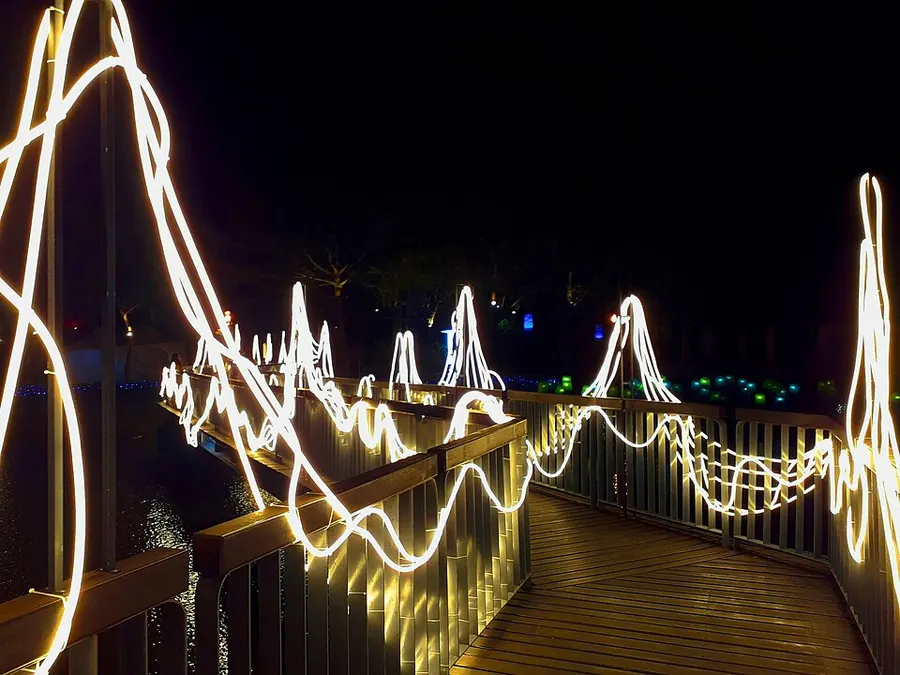
"A festival of light marking the end of Spring Festival — lantern displays, riddles, sweet rice balls, and dragon dances."
CIVILIZATION CONTEXT
This artifact is part of the Intangible Heritage Cluster. It connects to 4 entities across the atlas, spanning 0 regions, 0 masters, 1 festival, and 0 skills.
Lantern Festival: A Living Heritage
The Lantern Festival marks the 15th day of the first lunar month, concluding the Spring Festival period. It is celebrated with elaborate lantern displays, lantern riddles, tangyuan (sweet glutinous rice balls), and lion and dragon dances. The festival originated in the Han Dynasty as a Buddhist tradition of lighting lanterns to honor the Buddha, and evolved into a nationwide celebration of light, hope, and family reunion.
0
Related Cultural Vectors
History & Development
Lantern displays on the fifteenth night of the first lunar month gained imperial sponsorship when Emperor Ming of Han ordered palace and temple lamps lit in honour of the Buddha, fusing state celebration with temple ritual. Tang rulers suspended the capital curfew for three nights so crowds could tour the displays, and Song cities stretched the fair to five nights while stallholders began pasting written riddles on lamp shades — the moment lantern-making became a recognisable regional craft tradition rather than a household chore.
The State Council entered Yuanxiao festival customs in the first batch of the national intangible heritage list in June 2008, alongside regional lantern schools from Zhejiang to Sichuan. The listing protects the craft of the lamp as much as the festival itself: bamboo frame construction, paper covering, and figure painting are passed through named regional lineages, while the riddle couplets preserve a literary custom of wordplay that has run since the Song dynasty. The Qinhuai fair in Nanjing has run for well over a thousand years and now draws millions of visitors across the New Year season.
How a Lantern Is Built
- 01
Bending the frame
Artisans split bamboo into thin strips, steam them pliable, and bind rings and ribs with thread until the skeleton holds its shape without glue.
- 02
Covering the body
Paper or silk goes over the frame in smooth panels; translucent paper lets candlelight glow evenly across painted scenes.
- 03
Painting the scenes
Regional schools differ in technique — Zhejiang workshops favour figure painting in mineral pigments, while Sichuan makers specialise in monumental installations rather than hand-painted detail.
- 04
Lighting the lamp
Candles gave way to battery LEDs in public fairs, though temple processions still favour open flame inside fireproofed paper shades.
Common Questions
Why is the Lantern Festival on the fifteenth night?
It is the first full moon of the lunar year, and the fifteenth day is the mid-point of the Chinese month. A full moon was read as completeness and reunion, which is why the night closes the New Year season as a statement of restored wholeness.
Why do families eat tangyuan on this night?
The round glutinous rice balls echo the full moon and sound like the word for reunion, so serving them closes the New Year holiday with a wish for family wholeness.
What is the cultural role of lantern riddles?
Riddle couplets turn the festival into a literacy game: hosts hide answers in verse and solvers may not repeat a character between clue and answer. The craft of composing them is profiled in the lantern riddle story, and it is the reason Song-dynasty fairs could be entered by anyone who could read.
Why did UNESCO-style national heritage listing protect it?
The 2008 first-batch listing covers the customs and the lamp-making craft together, because the two are inseparable — the festival is only legible through the object, and the object only exists for the night.
Watch & Learn
Stories & Legends
The Emperor and the Lantern Riddles
historicalDuring the Han Dynasty, Emperor Mingdi promoted Buddhism by ordering lanterns lit in palaces and temples. To make the festival more engaging, scholars began writing riddles on lanterns for people to solve. The tradition of lantern riddles (cai dengmi) spread throughout China, combining celebration, wordplay, and intellectual challenge into a beloved Lantern Festival custom.
Spring Festival: Older Customs, a Recent Name
historicalThe year-season customs are ancient; the name Spring festival is comparatively recent. Most of what people mean by the festival has been practised for far longer than it has been called by that word.
Want to know when & how it's celebrated?
View the festival guide & datesRelated Festivals
Relationship Constellation
Tracing the invisible threads that connect Lantern Festival to the broader civilization ecosystem.
Continue the Journey
Lantern Festival
Folk Customs
Chinese Herbal Medicine
Traditional Medicine
arrow_forwardTuina Massage
Traditional Medicine
arrow_forwardQixi Festival
Folk Customs
arrow_forward