Folk Customs
Hangzhou, East China
Tang Dynasty (618–907 CE)
National Heritage
Master-Apprentice
Traditional Tea Processing
Chinese Tea Ceremony
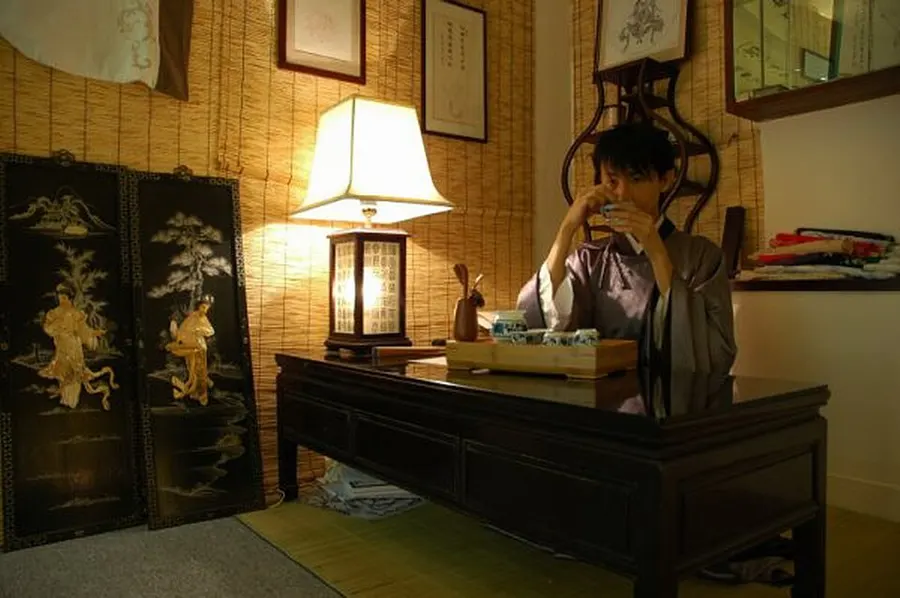
"The ancient art of preparing and serving tea — a meditative practice embodying harmony, respect, and the appreciation of nature."
CIVILIZATION CONTEXT
CROSS-SITE REFERENCES
This artifact is part of the Intangible Heritage Cluster. It connects to 12 entities across the atlas, spanning 2 regions, 0 masters, 0 festivals, and 1 skill.
Chinese Tea Ceremony: A Living Heritage
The Chinese tea ceremony (chayi) is the traditional art of preparing and serving tea that evolved over thousands of years. Rooted in the Tang Dynasty classic "The Classic of Tea" by Lu Yu, it emphasizes harmony, respect, purity, and tranquility. Different tea varieties require different ceremony styles — gongfu tea ceremony for oolong and pu'er, green tea ceremony for delicate teas. Tea drinking permeates Chinese social life, from formal gatherings to daily meals.
1
Related Cultural Vectors
Sources & Evidence
Status Source-backed
Primary source China national intangible cultural heritage list, 茶艺(潮州工夫茶艺)— project No. Ⅹ-107, announced 2008 (2nd batch), Chaozhou, Guangdong: https://www.ihchina.cn/project_details/15247.html ; tea-related social practices are additionally inscribed on the UNESCO Representative List under Traditional tea processing techniques (file 01884)
- — The gongfu tea-brewing art of the Chaoshan region (潮州工夫茶艺) is documented back to the Song dynasty and widespread by the mid-Qing, using mainly oolong tea and inheriting the values of Lu Yu's 《茶经》 (ihchina.cn project record 15247)
- — Tea drinking is part of socialisation and of ceremonies such as weddings and sacrifices (UNESCO ICH element description, file 01884)
- — Tea-related knowledge is transmitted within families and through apprenticeships (UNESCO ICH element description, file 01884)
Last reviewed: 2026-10-13
Status and primary source follow the official record. Other narrative on this page — including cultural interpretation — is the Atlas's own reading, not an external source.
History & Development
Formal tea culture crystallised in the eighth century when Lu Yu compiled the Cha Jing, the first monograph on tea, describing cultivation, water choice, and brewing vessels across ten chapters. Song dynasty whisked powdered tea into court spectacle, then Ming Hongwu Emperor banned compressed tribute cakes in 1391 and steeped loose leaf replaced the whisk, creating the gongfu method still used today.
Chaozhou and Fujian merchants carried gongfu cha along the coast and overseas, and Cantonese teahouses turned service into social ritual. In 2022 UNESCO inscribed Traditional Tea Processing Techniques and Associated Social Practices in China on the Representative List, covering forty-four registered techniques from green fixing to dark-tea piling.
How It Is Made
- 01
Warming the vessels
Boiling water rinses the teapot and cups so porcelain holds heat and dust leaves the set.
- 02
Awakening the leaves
A brief first infusion is poured away, letting rolled leaves unfurl and release trapped aroma.
- 03
High pouring, low serving
Water is poured high for agitation while tea is served low and close to the cup, preserving fragrance and temperature.
- 04
Smelling and tasting
Guests lift the aroma cup to the nose before drinking, then compare how each successive infusion sweetens and thins.
Common Questions
Why rinse the first pour?
The short awakening infusion opens rolled leaves and washes surface dust from traditionally processed teas. It lasts seconds and is discarded rather than drunk.
What equipment defines gongfu cha?
A small clay or porcelain pot, a pitcher for even strength, narrow tasting cups, and a draining tray. Small volumes allow many quick infusions from one portion of leaves.
How many infusions can good leaves give?
Rolled oolongs commonly yield six to eight infusions, and pressed pu-erh can exceed ten. Each round extracts different aromatic compounds as the leaf gradually opens.
Watch & Learn
Stories & Legends
Shennong and the Discovery of Tea
mythEmperor Shennong, the mythical father of Chinese agriculture and medicine, was known for tasting hundreds of herbs to test their medicinal properties. According to legend, while boiling water under a wild tea tree, a leaf fell into his pot. He drank the infusion and found it refreshing and detoxifying — the first cup of tea. The Classic of Tea by Lu Yu codified this origin story in the Tang Dynasty.
The Tea Horse Road: Brewing Civilization
historicalFrom a single leaf drifting into Shennong's pot to a global obsession.
Spring Festival: Older Customs, a Recent Name
historicalThe year-season customs are ancient; the name Spring festival is comparatively recent. Most of what people mean by the festival has been practised for far longer than it has been called by that word.
Skills & Techniques
Traditional Tea Processing expand_more
The craft of transforming fresh tea leaves into the six categories of Chinese tea through controlled withering, fixation, rolling, oxidation, and drying.
Steps
- Pluck tender tea leaves at the correct seasonal stage
- Wither leaves to reduce moisture content
- Fix (kill-green) by pan-firing or steaming to stop oxidation
- Roll leaves to shape them and release juices
- Oxidize to the desired degree (for oolong and black tea)
- Dry by baking or sun-drying to preserve the finished tea
Tools
withering tray, fixation pan, rolling table, baking basket, charcoal oven, bamboo sieve
Materials
fresh tea leaves (Camellia sinensis), charcoal
Related Places
Relationship Constellation
Tracing the invisible threads that connect Chinese Tea Ceremony to the broader civilization ecosystem.
Continue the Journey
Chinese Tea Ceremony
Folk Customs
Qixi Festival
Folk Customs
arrow_forwardLantern Festival
Folk Customs
arrow_forwardMazu Belief and Customs
Folk Customs
arrow_forward