Hani (哈尼族)
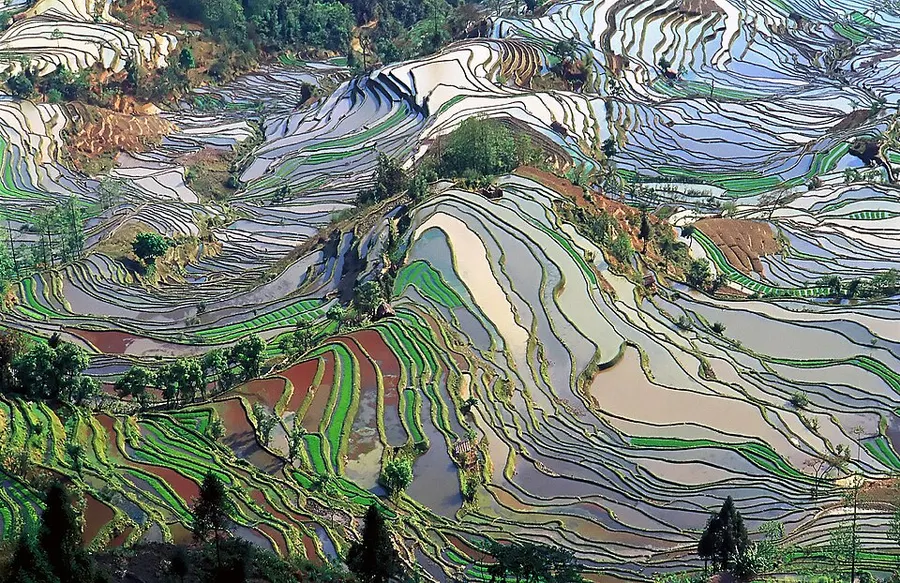
Terrace farmers of southern Yunnan, creators of the UNESCO-listed Honghe Hani Rice Terraces, known for long-street banquet festival.
The Soul of the Hani
Terrace farmers of southern Yunnan, creators of the UNESCO-listed Honghe Hani Rice Terraces, known for long-street banquet festival.
Cultural DNA
- Identity
- Hani
- 哈尼族
- Population
- 1,600,000
- 0.11% of China
- Status
- Active · Living Tradition
Living Traditions
Intangible knowledge passed through generations.
Neighboring Peoples
The Hani share cultural landscapes and historical exchange with neighboring ethnic communities across the region.
The Ritual Cycle
Festivals mark the rhythms of life for the Hani — celebrating harvests, honoring ancestors, and strengthening community bonds through music, dance, and feasting.
No festival relations recorded. Explore festival calendar
Cross-Cultural Threads
History & Development
The Hani, about 1.73 million people, terrace the Ailao Mountains along Yunnan's Red River, carving slopes into thousands of rice paddies stacked from valley floor to 2,000-meter ridgelines. The Yuanyang terraces — up to 3,700 individual steps in single slopes — feed spring water through village forests, channels, paddies, and rivers in a four-element watershed system that UNESCO inscribed as Cultural Landscape of Honghe Hani Rice Terraces in 2013.
An oral literature of sixty thousand lines — the Four Seasons Production Tune chanted by priests called mogu — encodes the agricultural calendar itself, moving from tree-felling songs to harvest blessings across the growing year. Villages cap their cycles with Long Street Banquets, hundreds of tables joined end-to-end through lanes at autumn's end, and mushroom-shaped thatched houses whose thick earthen walls buffer mountain fog.
Cultural Pillars
- 01
Terrace Engineering
Villagers govern shared channels through rotational water councils; duck-fish-rice co-cropping fertilizes paddies naturally, a system older than written records here.
- 02
Four Seasons Chant
Mogu priests recite the production-year liturgy at festivals, pairing each labor stage with myth — nationally listed in 2006 as an encyclopedia sung rather than written.
- 03
Long Street Banquet
Harvest villages align every household table into kilometer-long feasts; seating order encodes clan seniority and inter-village alliance.
- 04
Mushroom Houses
Rammed-earth walls, chestnut beams, and steep thatch cones shed fog rain while insulating against altitude nights — architecture shaped entirely by terrace microclimate.
Common Questions
Why are the Yuanyang terraces world famous?
Scale plus system: over 80 square kilometers of active terraces managed by intact village water councils, recognized as UNESCO Cultural Landscape in 2013. Photography peaks November-to-March when flooded paddies mirror sunrises.
Who keeps the Hani calendar?
Trained chanters — mogu — memorize the Sixty-thousand-line production tune dictating when to fell, flood, plant, and feast; hear how chant calendars compare with other highland traditions across Yunnan.
Can travelers join a Long Street Banquet?
Villages around Yuanyang and Honghe County seat announce dates at autumn festival time; outsiders buy seat tickets that fund the feast, sitting wherever tables link through the lanes.