Dai (Tai) (傣族)
Lowland Buddhist people of Yunnan, known for peacock dance, water-splashing festival, and Theravada Buddhist temple arts.
The Soul of the Dai (Tai)
Lowland Buddhist people of Yunnan, known for peacock dance, water-splashing festival, and Theravada Buddhist temple arts.
Cultural DNA
- Identity
- Dai (Tai)
- 傣族
- Population
- 1,200,000
- 0.09% of China
- Status
- Active · Living Tradition
Living Traditions
Intangible knowledge passed through generations.
The Ritual Cycle
Festivals mark the rhythms of life for the Dai (Tai) — celebrating harvests, honoring ancestors, and strengthening community bonds through music, dance, and feasting.
No festival relations recorded. Explore festival calendar
Cross-Cultural Threads
History & Development
The Dai, about 1.33 million people, live the monsoon valleys of Xishuangbanna and Dehong in subtropical Yunnan, speaking Tai languages kin to Thai and Lao. Their Buddhist civilization runs on its own 638-era calendar — the New Year falls each April in the solar passage now celebrated worldwide as Songkran's cousin — and monks historically copied sutras onto pressed palmyra leaves, producing palm-leaf canon libraries that survive in village monasteries today.
Heritage listings track the water-and-garden way of life: the Water Splashing Festival entered China's first national register in 2006 alongside Dai slow-wheel pottery and peacock-dance traditions. Stilted bamboo houses lift living floors above paddy heat and flood, villages plant rubber and pu'er tea in agroforestry mosaics, and the professional peacock dance — perfected by performers like Yang Liping — carried Dai aesthetics onto global stages.
Cultural Pillars
- 01
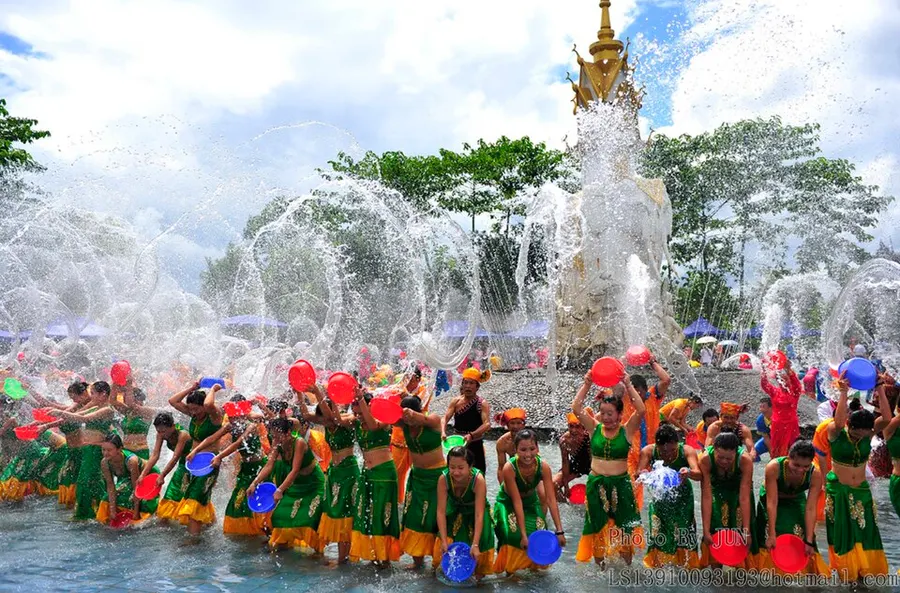
Water Splashing New Year
Three days of bowl-and-bucket splashing wash away the old year's misfortune between dragon-boat races and sand-pagoda building; April dates follow the Dai calendar, not the lunar one.
- 02
Palm-Leaf Scriptures
Monks engrave Pali texts with iron styluses onto smoked palmyra leaves bound in painted covers — scripture archives listed among national documentary treasures.
- 03
Peacock Dance
Dancers mimic displaying peacocks through fingernail extensions and knee-bend glides; folk versions open festivals while stage choreography toured forty-plus countries.
- 04
Slow-Wheel Pottery
Women center clay on turntables spun by hand, coil-building water jars fired in open straw heaps — a technique nationally protected since 2006.
Common Questions
When is the Dai New Year?
Mid-April (around the 13th–15th), fixed by the Dai solar calendar rather than Chinese lunar dates; Xishuangbanna's Jinghong hosts the largest water battles and dragon-boat finals.
Why splash water on people?
Water carries blessing — elder ritual first sprinkles Buddha images and respected hands, then the festival dissolves into joyful free-for-all soaking; being drenched signals good luck for the coming year.
What are palm-leaf scriptures?
Sutra collections engraved letter-by-letter onto treated palmyra strips, some centuries old, kept in monastery cabinets as both canon and art object — the written heart of Dai Buddhism across Yunnan valleys.