Folk Customs
—
Shang Dynasty (1600–1046 BCE)
Representative List
Master-Apprentice
Oral Tradition
Spring Festival
"China's most important traditional festival, marking the lunar new year with family reunions, feasts, and vibrant cultural celebrations."
CIVILIZATION CONTEXT
CROSS-SITE REFERENCES
DaoOfSeasons
Start of Spring: The Seasonal Gateway
Spring Festival aligns with Start of Spring — the dawn of the agricultural year
TheWayOfNatureAtlas
Seasonal Living and the Spring Festival
Spring Festival as the highest expression of seasonal living in Chinese culture
TheWayOfNatureAtlas
Spring Festival (春节): The Entity View
The lunar new year as a seasonal and renewal entity, beyond its heritage inscription
This artifact is part of the Intangible Heritage Cluster. It connects to 16 entities across the atlas, spanning 0 regions, 0 masters, 1 festival, and 0 skills.
Spring Festival: A Living Heritage
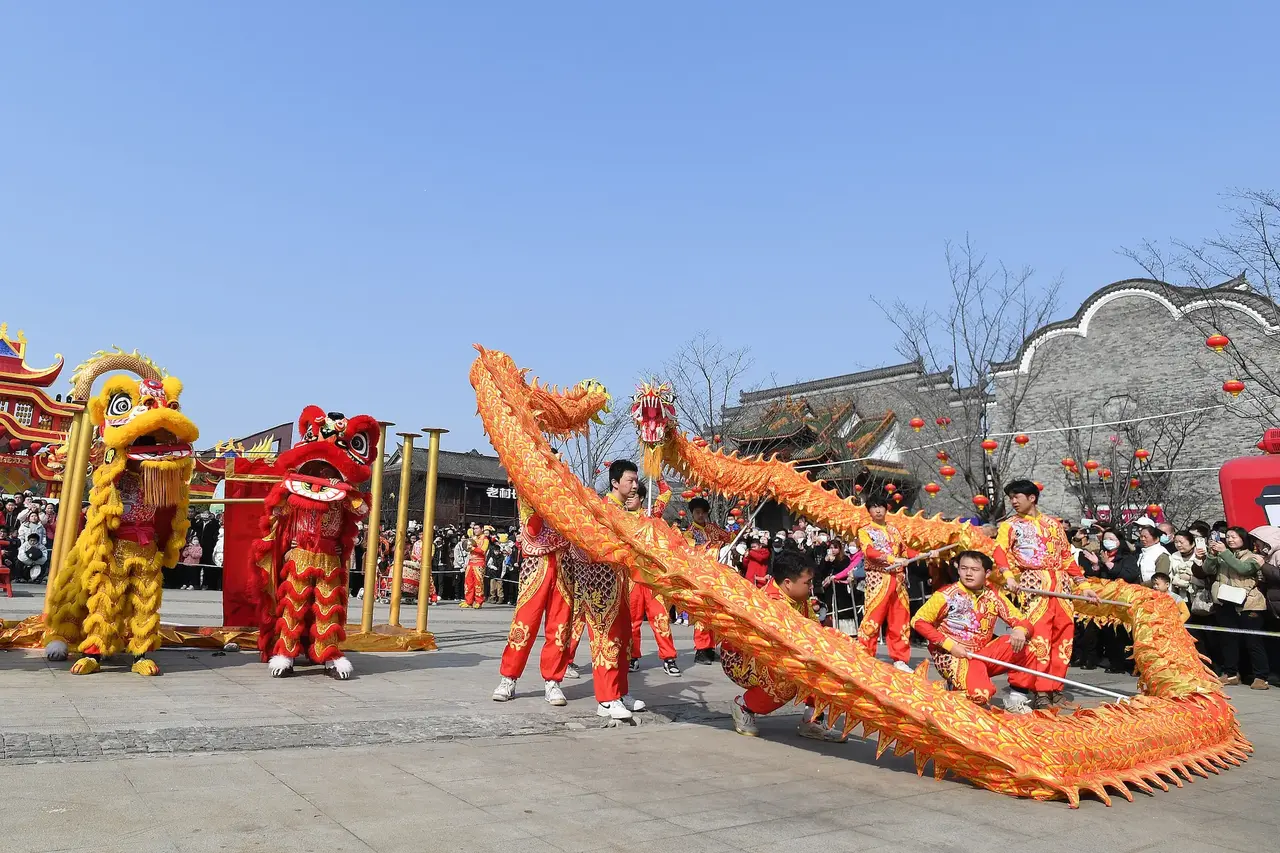
The Spring Festival, also known as Chinese New Year, is the most important traditional festival in Chinese culture. Marking the beginning of the lunar new year, it is a time of family reunion, ancestor veneration, and elaborate celebrations including temple fairs, dragon and lion dances, and fireworks. In December 2024, it was inscribed on the UNESCO Representative List of the Intangible Cultural Heritage of Humanity.
0
Related Cultural Vectors
Sources & Evidence
Status UNESCO Representative List (inscribed)
Primary source UNESCO Intangible Cultural Heritage, Representative List — Nomination file No. 02126: https://ich.unesco.org/en/RL/spring-festival-social-practices-of-the-chinese-people-in-celebration-of-traditional-new-year-02126
- — Inscribed on the UNESCO Representative List in 2024. (Nomination file 02126; 19.COM decision)
- — Marks the beginning of the new year — the first day of the first month of the traditional Chinese calendar. (UNESCO ICH element description, file 02126)
- — Social practices include ushering in the new year, praying for good fortune, family reunions and community harmony, together known as guonian ("crossing the year"). (UNESCO ICH element description, file 02126)
Last reviewed: 2026-10-13
Status and primary source follow the official record. Other narrative on this page — including cultural interpretation — is the Atlas's own reading, not an external source.
Gallery
History & Development
New Year observances in China predate the modern calendar, with oracle-bone records of year-opening sacrifices from the Shang dynasty. The Han court fixed the first day of the first lunar month as the year head when the Taichu calendar took effect in 104 BCE. After the Republic adopted the Gregorian calendar in 1912, the lunar celebration was renamed Spring Festival in 1914 to separate it from 1 January.
UNESCO inscribed the Spring Festival on the Representative List of Intangible Cultural Heritage in December 2024, nominating the social practices of the Chinese people in celebration of the traditional new year. The listing frames the festival not as folklore but as a living body of communal knowledge — seasonal renewal, kinship obligation, and shared identity maintained across generations. It is now observed as a public holiday in nearly two dozen countries, and the United Nations made Lunar New Year a floating holiday for its staff in 2023.
Symbols and Their Meanings
- 01
Reunion as social obligation
The New Year Eve feast is the clearest expression of the festival core value: xiao, or filial reverence. Absent migrant workers who cannot travel home call home on a video line to complete the table symbolically, and a single place is always left empty for deceased ancestors.
- 02
Red as warding colour
Red is not decorative. Red paper, red envelopes, red couplets and red lanterns all share one logic — the colour of vitality and good fortune. It has its own recorded history: red paper at the door began as wooden charms bearing the figures of door gods, and became couplets after the Later Shu emperor Meng Chang wrote his New Year verse on them. The story of the Nian monster is a later narrative that explains why red is worn, not the reason it started.
- 03
Wordplay as blessing
Fish (yu, surplus) and rice cakes (nian gao, higher year) are chosen for how their names sound rather than for what they are. Dumplings join the same logic, though the readings attached to them vary by region and period: the familiar explanation that the shape recalls an old silver ingot is widely repeated and not uniformly documented. The homophone, not the dish, is the actual offering.
- 04
Transfer of protection
Elders hand hongbao, red envelopes of cash, to the young. The gesture is recorded from the Song dynasty and works as a controlled transfer of protection across the generational line, keeping the household intact for the coming year.
Common Questions
Why is the Spring Festival on the UNESCO Intangible Heritage list?
It was inscribed in December 2024 as "spring festival, social practices of the Chinese people in celebration of traditional new year." UNESCO recognises the practices — reunion, seasonal renewal, and the ritual calendar — rather than a single object or performance.
What is the cultural meaning of the reunion dinner?
It enacts filial reverence (xiao). Every generation sits at one table, an empty place is kept for ancestors, and families who cannot reunite still mark the meal — the obligation survives the distance rather than being waived by it.
Why is the colour red used everywhere?
Red signifies vitality and good fortune, and it is worn as protection. The tradition credits it with driving off the Nian, a mythical beast said to attack villages at year end, which is why firecrackers and red paper dominate the holiday.
How did the festival change after 1912?
The Republic adopted the Gregorian calendar in 1912, so the lunar new year was renamed Spring Festival in 1914 to separate it from 1 January. The name marks the split, not a break in practice — the lunar cycle still governs the date.
Watch & Learn
Stories & Legends
The Legend of the Nian Monster
legendLong ago, a monster called Nian (meaning "year") would descend from the mountains every New Year's Eve to devour villagers and livestock. The people discovered Nian feared the color red, bright light, and loud noises. They began decorating their homes in red, lighting lanterns and firecrackers to drive Nian away. This tradition evolved into the Spring Festival customs observed today.
Spring Festival: Older Customs, a Recent Name
historicalThe year-season customs are ancient; the name Spring festival is comparatively recent. Most of what people mean by the festival has been practised for far longer than it has been called by that word.
The Dancing Lion: From Exorcism to Celebration
historicalWhen two people become one beast, evil spirits flee and prosperity arrives.
The Dragon Boat Festival: Memory, River, Nation
historicalA poet's sacrifice became a nation's memory, celebrated every summer.
Want to know when & how it's celebrated?
View the festival guide & datesRelated Festivals
Relationship Constellation
Tracing the invisible threads that connect Spring Festival to the broader civilization ecosystem.
Continue the Journey
Spring Festival
Folk Customs
Twenty-Four Solar Terms
Folk Customs
arrow_forwardGuqin and Its Music
Traditional Music
arrow_forward