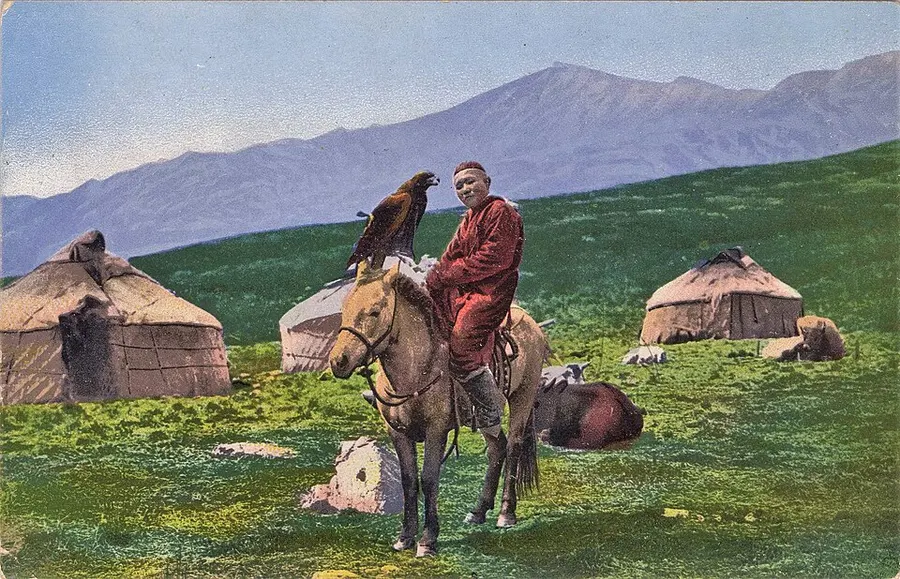
Kazakh (哈萨克族)
Nomadic herders of Xinjiang and Gansu, known for Aitys (improvised poetic duels), dombra music, and eagle hunting with golden eagles.
The Soul of the Kazakh
Nomadic herders of Xinjiang and Gansu, known for Aitys (improvised poetic duels), dombra music, and eagle hunting with golden eagles.
Cultural DNA
- Identity
- Kazakh
- 哈萨克族
- Population
- 1,500,000
- 0.11% of China
- Status
- Active · Living Tradition
Living Traditions
Intangible knowledge passed through generations.
Neighboring Peoples
The Kazakh share cultural landscapes and historical exchange with neighboring ethnic communities across the region.
The Ritual Cycle
Festivals mark the rhythms of life for the Kazakh — celebrating harvests, honoring ancestors, and strengthening community bonds through music, dance, and feasting.
No festival relations recorded. Explore festival calendar
Cross-Cultural Threads
History & Development
Kazakhs in China number about 1.56 million, herding the Ili Valley and Altai foothills of Xinjiang plus Gansu and Qinghai grasslands, kin to the Kazakh Republic across the border. Horse-nomad institutions survived collectivization in adapted form: transhumant moves between winter and summer pastures continue, yurt camps dot the Ili steppes each June, and eagle hunters still fly golden eagles from horseback in Altai winters.
Verbal art anchors identity. Akyn poet-improvisers duel in sung debate (aitys) accompanying themselves on the two-string dombra, tournaments nationally listed in 2006; horse games — kokpar goat-carcass polo and kyz kuu "catch the girl" races — structure summer gatherings. Epic singers recite hero tales running nights at a time, a repertoire shared with Central Asian cousins and recorded extensively by Xinjiang academies.
Cultural Pillars
- 01
Akyn Improvisation Duels
Two poets trade satirical verses to dombra accompaniment until one falters; wit and rhyme density decide champions at district and regional festivals.
- 02
Eagle Hunting
Golden eagles trapped as fledglings hunt foxes and corsac from horseback; handlers bond for a decade before traditional release, a cycle documented in Altai counties.
- 03
Horse-Field Games
Kokpar riders wrestle a goat carcass goalward in team scrums; kyz kuu chases test horsemanship between young couples with playful reversal rules.
- 04
Yurt Hospitality Law
Travelers may claim shelter uninvited; hosts sacrifice honor if guests leave unfed — felt-door etiquette that structured Silk Road steppe travel for centuries.
Common Questions
What is an akyn?
An improvised-poetry bard singing social commentary and duels to dombra strings; unlike memorizing manaschi, akyn must compose live. Their contests rank among Xinjiang's signature festivals.
Is eagle hunting still practiced?
Yes, by dozens of licensed hunters in the Altai; seasonal festivals now stage flights for judges and cameras, while actual winter hunting continues on remote ridgelines.
How is Kazakh gathering culture different from Uyghur meshrep?
Meshrep sits in fixed neighborhood venues mixing music with moral arbitration, while Kazakh arts tour with the pasture calendar — duels and games move to whichever camp hosts weddings; compare structures in meshrep.