menu_book The Full Narrative
01
The Silk Road Technique
Cloisonné originated in the Byzantine Empire and traveled east along the Silk Road to China during the Yuan Dynasty. The technique was transformative: thin metal wires soldered onto a metal base create cells (cloisons), which are filled with colored glass paste and fired at high temperatures. The result is a surface that glows like stained glass.
02
The Jingtai Emperor's Patronage
Cloisonné flourished under the Ming Dynasty's Jingtai Emperor (1450–1457), giving it the Chinese name jingtailan — literally "Jingtai blue." The emperor was so enamored with the technique that the finest pieces were produced in imperial workshops, reserved exclusively for the court. The deep blue enamel from this period is still considered the gold standard.
03
The Thousand-Fire Process
A single cloisonné piece requires dozens of firings. Each layer of enamel shrinks as it cools, requiring repeated refilling and refiring. A large vase may be fired 50 times. Finally, the surface is polished smooth, revealing the wire pattern and the jewel-like enamel. The entire process can take months for a single piece.
04
From Palace Storehouses to World Fairs
Cloisonné escaped the palace in the final decades of the Qing dynasty and won its first international audience at world expositions. Workshops such as Laotianli in Beijing imperial workshop districts exhibited jars at Saint Louis in 1904 and at the Panama-Pacific Exposition in 1915, collecting top prizes both times. Export orders followed, and by the mid-20th century tens of thousands of workers in the capital produced enamelware for foreign markets.
05
The Wire Cells Hold Their Color Today
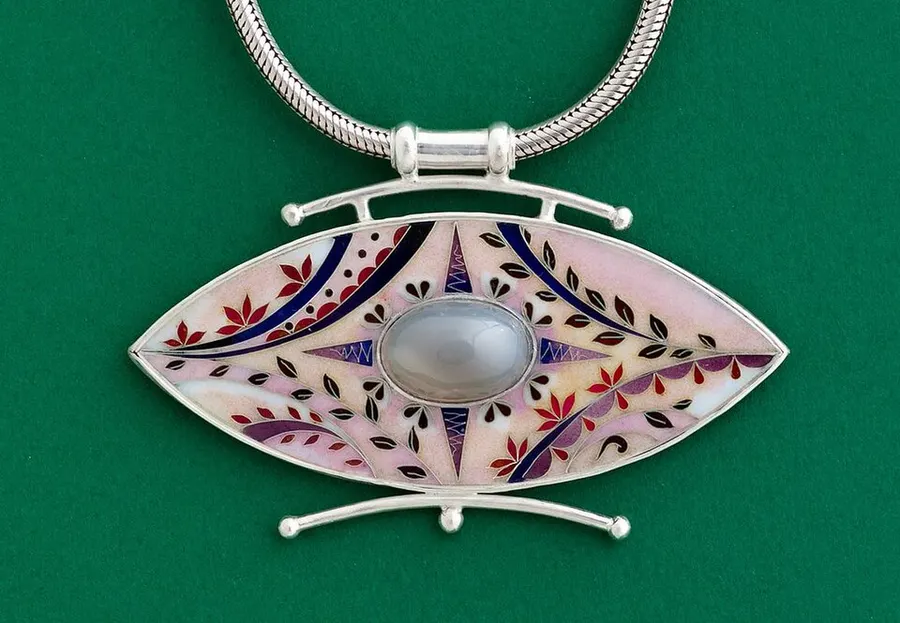
The state inscribed cloisonné production technique in the first batch of the national intangible cultural heritage list, and designated masters keep every firing stage alive. Zhang Tonglu, a China Arts and Crafts master trained in the Beijing enamel factories, pushes the wire-cell method into jewelry-scale pieces that survive the same fifty firings as Ming court vases. Visitors who want to trace the full arc from Byzantine cellwork to Chinese glaze can study the cloisonné wire-and-enamel technique through surviving Jingtai-era blue basins.
06
The Wireless Branch That Fed the Export Trade
Guangzhou workshops rewired cloisonne economics during the eighteenth century. While Beijing kept the wire-cell monopoly for palace ware, Canton artisans developed painted enamel on copper without wires, trading speed and color range for the export market. The East India companies ordered dinner services and portrait plaques by the crate, and Qianlong-era customs records list enamels among the port's top craft exports to Europe. European courts collected Cantonese pieces under the name 'Peking work' regardless of origin, confusing attribution for a century. The two branches diverged technically: wire cells hold saturated blues that firing cannot bleed, while painted surfaces allowed gradients closer to miniature painting, which Cantonese decorators exploited for portrait commissions. Collectors today price the wired Beijing tradition higher, but museum surveys credit the unwired southern branch with carrying enamel craftsmanship through the trade disruptions that nearly closed the capital workshops.