Traditional Crafts
Hangzhou, East China
Eastern Jin Dynasty (317–420 CE)
Representative List
Master-Apprentice (Hands-on)
Longquan Celadon Glazing
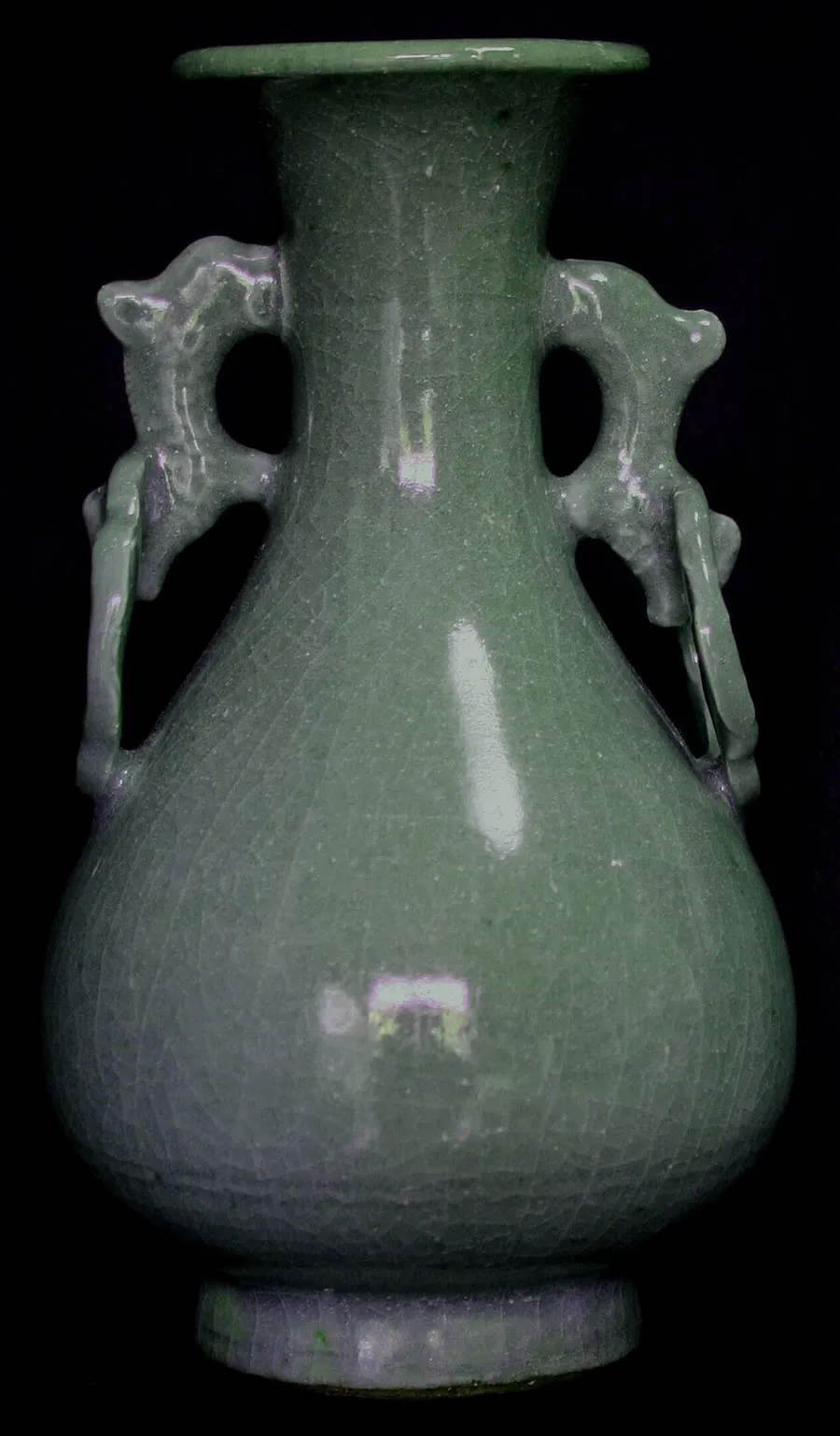
Longquan Celadon
"Jade-green ceramics from Zhejiang, treasured for over 1,600 years as one of China's most celebrated contributions to global ceramic art."
CIVILIZATION CONTEXT
This artifact is part of the Intangible Heritage Cluster. It connects to 10 entities across the atlas, spanning 1 region, 1 master, 0 festivals, and 1 skill.
Longquan Celadon: A Living Heritage
Longquan celadon is a type of green-glazed ceramic produced in Longquan, Zhejiang Province, for over 1,600 years. Renowned for its jade-like glaze colors — ranging from pale "powder green" to deep "plum green" — Longquan celadon was exported across Asia, Africa, and Europe via the Maritime Silk Road. The craftsmanship involves careful clay preparation, wheel throwing, and precise glaze formulation. The iconic "seaweed green" and "plum green" glazes are celebrated worldwide.
1
Related Cultural Vectors
History & Development
Longquan kilns in southwest Zhejiang fired green-glazed stoneware from the tenth century and peaked during the Southern Song, when tradition places brothers Zhang dividing the family workshop around 1200 into crackle-skinned Ge ware and plum-green Di ware. Potters dipped vessels three or four times until glaze layers approached a millimetre thick, giving the jade-like depth collectors prize.
Jingdezhen blue-and-white eroded Longquan orders after 1300 and the hills fell silent by the Qing. The county reopened a state factory in 1956, master Xu Chaoxing refired thousands of test kilns to recover Song glaze recipes, and UNESCO inscribed Longquan celadon firing techniques on the Representative List in 2009.
How It Is Made
- 01
Preparing the stone body
Workers levigate local porcelain stone with field clay into a white stoneware body that stays steady through long high firing.
- 02
Throwing restrained forms
Song-era shapes stay simple, since the glaze itself provides decoration and thick walls hold heat evenly during reduction.
- 03
Layering the glaze
Vessels receive three or four dip coats, drying between rounds, until glaze thickness nears one millimetre and turns opaque jade green.
- 04
Firing in reduction
Kilns starve oxygen near 1,300 degrees Celsius so iron in the glaze converts to soft blue-greens, judged by flame colour through the spy hole.
Common Questions
Where does the green colour come from?
Iron oxide fired in low-oxygen reduction shifts from amber to grey-blue greens; more iron and thicker layers deepen the tone toward Song celadon's famous plum green.
What is Ge ware crackle?
Deliberate crackle forms when body and glaze shrink at different rates; potters stain the networks with ink so double crackle reads as dark lines inside pale ones.
How does Longquan compare with Jingdezhen porcelain?
Longquan sells glaze depth on simple stoneware forms while Jingdezhen porcelain craftsmanship centres on painted decoration over white kaolin bodies, two trades that competed for export markets for centuries.
Watch & Learn
Stories & Legends
Wood and Earth: The Magic of Longquan Celadon
historicalChinese potters chased the color of jade for a thousand years.
The Porcelain Road: Jingdezhen and the World
historicalA remote town in Jiangxi produced the finest ceramics the world had ever seen for over a thousand years.
Skills & Techniques
Longquan Celadon Glazing expand_more
The technique of applying the distinctive jade-green glaze to celadon ceramics, using iron oxide and precise kiln atmosphere control.
Steps
- Prepare the clay body from locally sourced porcelain stone
- Shape the vessel on a potter's wheel or by hand molding
- Dry to leather-hard state and trim excess clay
- Apply the first layer of iron-bearing glaze by dipping or pouring
- Allow glaze to dry and apply second coat
- Fire in a reduction kiln at 1250–1300°C to achieve jade-green color
Tools
potter's wheel, trimming tools, glaze bucket, kiln, pyrometer
Materials
porcelain stone, iron oxide, wood ash, feldspar, quartz
Related Places
Generations Preserved
Xu Chaoyun
Xu Chaoyun is a master celadon artisan from Longquan, Zhejiang Province. He spent decades researching and reviving the ancient "plum green" and "powder green" glazes that made Longquan celadon famous ...
Relationship Constellation
Tracing the invisible threads that connect Longquan Celadon to the broader civilization ecosystem.
Continue the Journey
Longquan Celadon
Traditional Crafts
Cloisonné Enamel
Traditional Crafts
arrow_forwardSuzhou Embroidery
Traditional Crafts
arrow_forwardShu Embroidery
Traditional Crafts
arrow_forward