Li (黎族)
Indigenous people of Hainan Island, known for Li textile spinning, dyeing, weaving, and embroidery techniques (UNESCO-listed).
The Soul of the Li
Indigenous people of Hainan Island, known for Li textile spinning, dyeing, weaving, and embroidery techniques (UNESCO-listed).
Cultural DNA
- Identity
- Li
- 黎族
- Population
- 1,400,000
- 0.10% of China
- Status
- Active · Living Tradition
Living Traditions
Intangible knowledge passed through generations.
Neighboring Peoples
The Li share cultural landscapes and historical exchange with neighboring ethnic communities across the region.
The Ritual Cycle
Festivals mark the rhythms of life for the Li — celebrating harvests, honoring ancestors, and strengthening community bonds through music, dance, and feasting.
No festival relations recorded. Explore festival calendar
Cross-Cultural Threads
History & Development
The Li, about 1.6 million people, are Hainan Island's earliest settlers, cultivating tropical valleys for more than three millennia before Han migration reached the island. Five dialect branches (Ha, Ge, Run, Meifu, Qi) share a heritage of tattooed grandmothers — the last generation bearing full facial and limb patterns — and boat-shaped thatched houses whose overturned-hull silhouette recalls ancestral sea crossings.
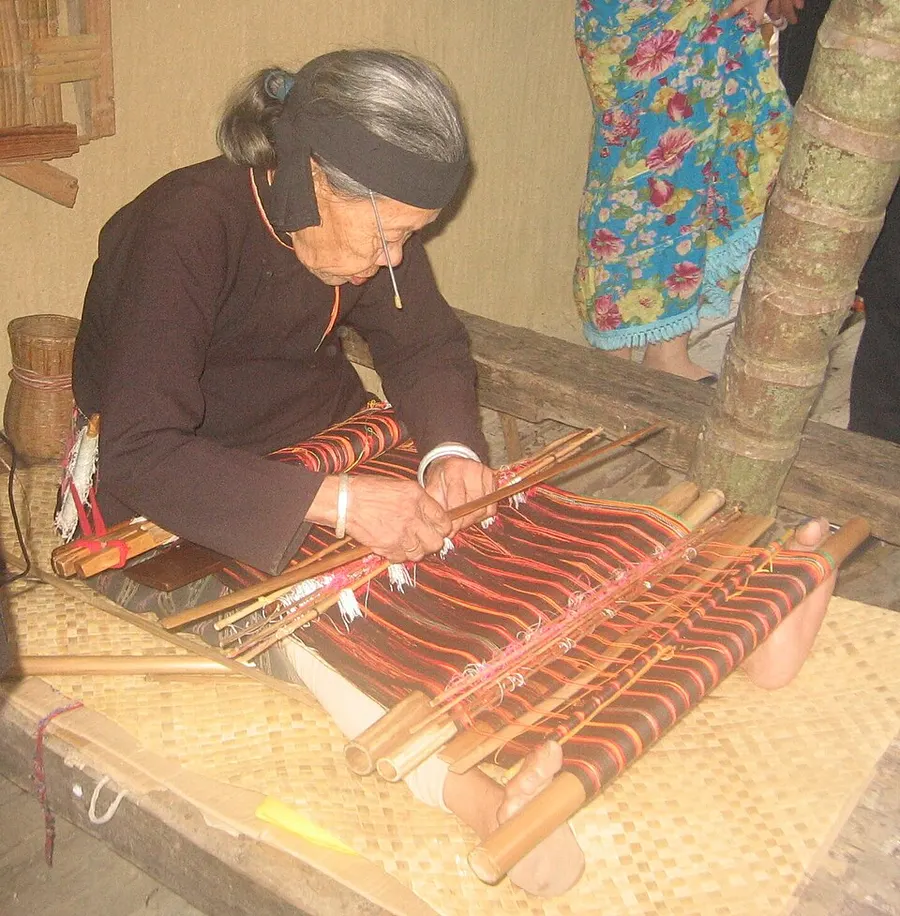
Textile art made the group globally significant: Li women ginned, spun, dyed, and wove cotton on back-strap waist looms centuries ahead of Europe, techniques Song-era Huang Daopo carried to Shanghai's coast and industrialized. UNESCO placed Li textile skills — spinning, dyeing, weaving, embroidery — on the Urgent Safeguarding List in 2009, transferring them to the Representative List in December 2024 as safeguarding succeeded, a first-in-China upgrade celebrated island-wide.
Cultural Pillars
- 01
Waist-Loom Weaving
Straps around the weaver's back tension warp threads body-taut, producing brocade without frames; master pieces compress hundred-motif vocabularies into skirt bands.
- 02
Natural Dye Craft
Indigo greens leaves blue, but li dye houses also boil mahogany bark and mountain ash for browns, then wax-crackle patterns by hand-painting molten resist.
- 03
Boat-Shaped House Building
Coconut-wood frames arch under thatch layers reversed like hulls; construction chants thank the sea-crossing ancestors each ridgepole raising reenacts.
- 04
Sanyuesan Courtship Festival
Lunar March third gathers hillside camps for antiphonal love-song duels, bamboo-pole dances, and wedding negotiations sealed with betel exchange.
Common Questions
Why did UNESCO move Li textiles off the urgent list?
Because transmission recovered: training centers in Baisha and Wuzhishan certified hundreds of young weavers, and the December 2024 transfer to the Representative List marked China's first graduation from urgent status. Study the techniques behind Li textile techniques.
Do Li tattoos continue?
Effectively no — practitioners stopped with the generation born before 1950; museums record remaining grandmothers' patterns as intangible archives tied to clan identification.
What makes boat-shaped houses special?
They encode origin memory in architecture — rooflines mimic inverted canoes honoring ancestors who sailed from the mainland — while thick thatch breathes in tropical humidity better than tile.